

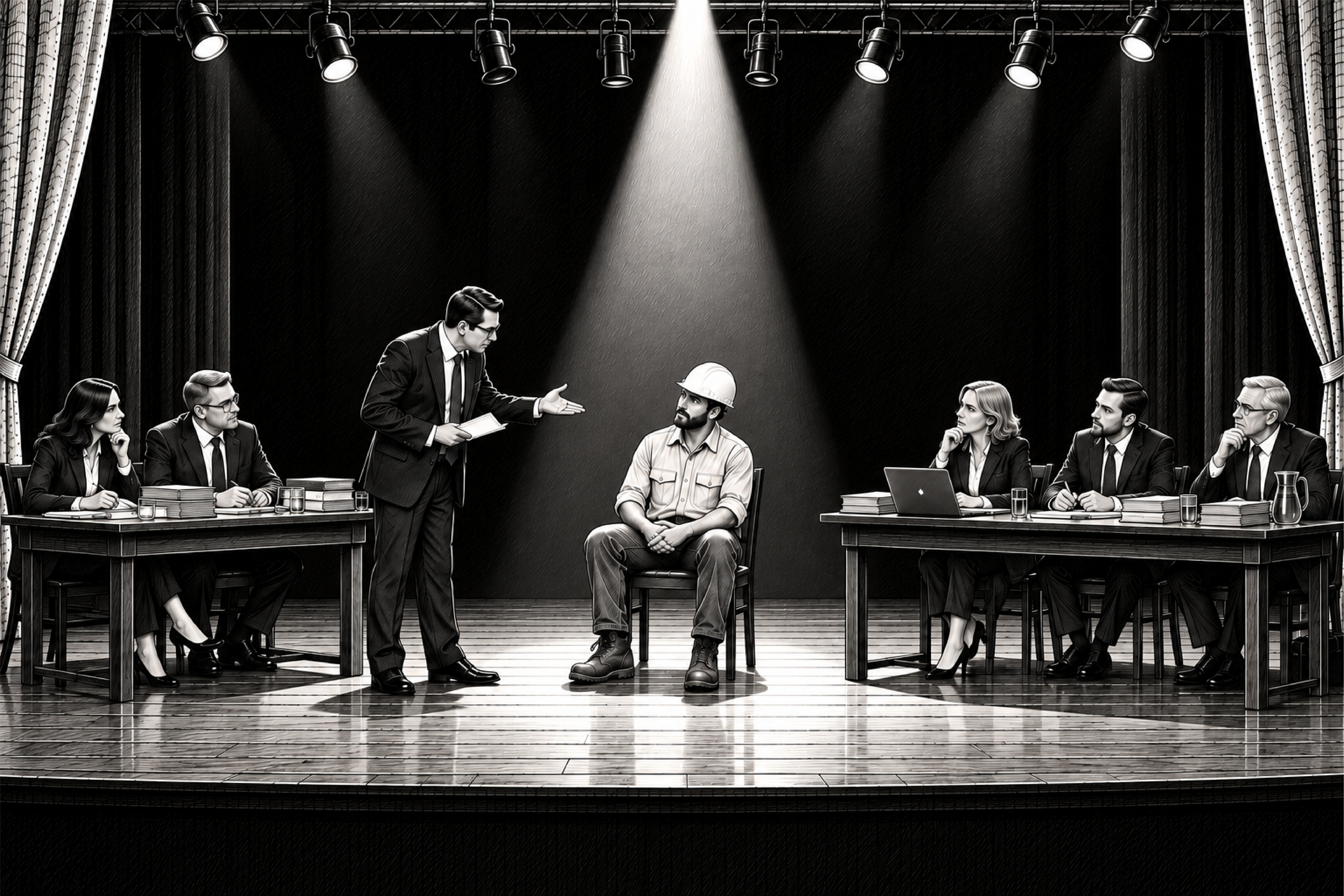
By the time you reach Expert Discovery, you and your legal team have spent months, and maybe years, trying to uncover the facts. Documents have been produced. Emails have been read. Written questions have been answered. Witnesses have been deposed. You should know substantially more about your lawsuit than you knew when you filed it.
Now it is time to bring in the experts. Expert Discovery is different from the Fact Discovery that we discussed earlier in Chapter 5. Fact Discovery is largely about getting the facts out into the open. Expert Discovery is largely about helping make sense of those facts. That distinction is important.
Experts aren't necessarily hired to discover new facts. Sometimes they do. An expert may perform an inspection, conduct testing, make calculations or develop other information that wasn't previously available. But more often, an expert takes facts that have already been developed and looks at them through the lens of specialized knowledge and experience.
For example, you likely have a rebuilding estimate from your insurance company. What does an experienced construction estimator think it should really cost to rebuild your house?
As another example, you have thousands of pages from the insurance company's claim file. What does an experienced insurance claims professional think about how your claim was handled?
Finally, you may have incurred emotional distress because of the way that your homeowners insurance company has handled your claim. Can a psychiatrist or psychologist confirm the emotional damage?
These are a small handful of examples of where an expert may be necessary.
Fact Discovery gets the pieces onto the table. Expert Discovery helps explain what the pieces mean.
There is an important difference between a fact witness and an expert witness. A fact witness generally testifies about facts that the witness personally knows. Your insurance adjuster can testify about what the adjuster did while handling your claim. Your contractor can testify about the estimate that the contractor prepared. You can testify about your interactions with the insurance company and what happened to you.
An expert witness is different. An expert is permitted to offer opinions based upon specialized knowledge, skill, experience, training or education that an ordinary witness generally would not be permitted to offer. That is important because many of the issues in an insurance lawsuit require more than simply putting documents in front of a jury. Someone may need to explain what those documents mean. Your lawyer can't do that by simply standing in front of the jury and saying:
Your lawyers are advocates. They present evidence, question witnesses and make arguments based upon the evidence in a manner that is favorable to you or the Defendant. They aren't witnesses.
When a conclusion requires specialized knowledge, your legal team may need a qualified expert to provide that conclusion.
The experts you need will depend upon the issues in your lawsuit. A homeowners insurance lawsuit can involve a surprising number of different experts, including:
An insurance claims expert may review the insurance company's handling of your claim. The expert may examine the claim file, communications, investigation, payments, delays, estimates and other evidence and offer opinions concerning insurance claims practices and whether the insurance company's handling of your claim was reasonable.
This type of expert can become particularly important when you are alleging Insurance Bad Faith. And remember: the insurance company may have its own claims expert who reaches exactly the opposite conclusion.
If the cost to repair or rebuild your house is disputed, a construction expert or experienced contractor may evaluate the scope of work, construction methods and rebuilding costs.
Your expert may conclude that rebuilding will cost $3 million. The insurance company's expert may conclude that substantially the same house can be rebuilt for $2 million.
Same house. Many of the same facts. Very different opinions.
If the amount of your personal property loss is disputed, an expert may be needed to value particular items or categories of property. This can become especially important when the contents of the house include unusual, expensive or difficult-to-value property.
Some damages require financial analysis. A forensic accountant or economist may analyze financial records and calculate economic losses that cannot simply be established by adding up invoices.
For homes that survived a wildfire but suffered smoke, ash or other contamination, environmental experts and industrial hygienists may become extremely important. They may evaluate testing, contamination, remediation protocols and whether a home can safely be occupied.
If you are claiming physical or psychological injuries caused by the insurance company's conduct, those claims may require appropriately qualified medical or psychological experts.
This isn't necessarily an exhaustive list. The important point is that the experts you need depend on the specific issues in your lawsuit. You don't hire experts simply because experts are something that lawsuits have. You identify the issues that will require specialized testimony and then determine what expertise is necessary to prove them.
Expert Discovery isn't a one-sided exercise. The insurance company will identify its own experts. If your construction expert says your house will cost $3 million to rebuild, expect the insurance company to have somebody prepared to explain why it can be rebuilt for less. If your claims expert says the insurance company's conduct fell below accepted insurance claims practices, expect the insurance company to have an expert prepared to explain why its conduct was reasonable. If your environmental expert says extensive remediation is required, expect the insurance company to have somebody prepared to explain why less remediation is sufficient.
The insurance company will identify its own experts.
The insurance company may even need independent experts to testify about aspects of its own business. An insurance company employee can testify about what that employee personally did. But that is different from offering an independent expert opinion about industry practices or another subject requiring specialized expertise.
By the time Expert Discovery is complete, there may be two groups of highly credentialed people looking at substantially the same evidence and reaching very different conclusions.
This is where things get interesting. At Trial, your expert may take the witness stand and explain an opinion to the jury. Then the insurance company's lawyer gets to cross-examine your expert. Later, the insurance company's expert may take the stand and offer a very different opinion. Your lawyer gets to cross-examine that expert. Ultimately, the jury may need to decide which expert it finds more credible and persuasive.
That means choosing an expert involves more than finding the person with the longest résumé. Credentials matter. An expert needs appropriate knowledge, skill, experience, training or education in the field in which the expert intends to testify.
But there is more to being a good expert witness than having impressive credentials. Can the expert explain a complicated subject in language ordinary people can understand?
Does the expert know the facts of your case? Does the expert appear objective? Can the expert explain the methodology used to reach an opinion? Can the expert withstand an aggressive deposition? Can the expert withstand cross-examination in front of a jury? And perhaps most importantly, will the jury believe the expert?
A brilliant engineer who can't explain engineering to a jury may not be the best expert witness. The same can be true of a famous professor, an accomplished physician, an experienced insurance executive or any other highly credentialed person.
Subject matter expertise and expert-witness skill aren't necessarily the same thing. You would like to find someone who has both.
Most experienced lawsuit lawyers have experts they have worked with before. There are good reasons for that. Your lawyers already know the expert's work. They know whether the expert is responsive. They know whether the expert prepares thoroughly. They may have seen the expert perform in deposition or at Trial. There is substantial value in that experience.
But that doesn't mean the people your lawyers have previously used are necessarily the best experts for every issue in your lawsuit. This is another area where being a better client can help. Do some independent research. If you need a specialist in a particularly narrow subject, learn who the recognized experts are. Look at professional backgrounds.
Publications. Academic affiliations. Industry experience. Prior expert testimony. Other relevant credentials. And this is another area where your AI can be particularly useful, especially if you have been regularly uploading documents from your lawsuit, as we have recommended.
An AI research agent can help search a much larger universe than the handful of experts your legal team may already know. It can help identify people with highly specific subjectmatter expertise, locate their published work and help you understand their professional backgrounds.
That doesn't mean you should hire an expert yourself. Bring the names back to your legal team. Let your lawyers investigate the potential expert, determine whether there are conflicts, review prior testimony, evaluate whether there are vulnerabilities that could be exploited on cross-examination, and decide whether the person would actually make a good expert witness.
The Professional Client isn't trying to replace the legal team.
The Professional Client is helping make the team's universe of potential experts bigger.
Lawsuits are already expensive. Then Expert Discovery begins. Now, in addition to paying your legal team, you are paying experts. And you are frequently paying your legal team to manage professionals who are also charging you for their time.
Your expert may need to review thousands of pages of documents. Your lawyers may need to organize those documents and explain the lawsuit to the expert. There will be meetings and telephone calls between your lawyers and your experts. The expert may perform calculations, inspections or testing. Depending upon the case, the expert may prepare a written report. Your lawyers will need to review the opinions.
The insurance company's lawyers will take your expert's deposition. Your expert charges for preparing for and attending that deposition. Your lawyers charge for preparing the expert and defending the deposition.
Then the process reverses. The insurance company identifies its experts. Your lawyers need to study their backgrounds, review their opinions and prepare to take their depositions.
Your lawyers take those depositions. Your own experts may need to help your lawyers understand where the opposing experts are wrong. Then everybody prepares for Trial.
There are now two meters running, the legal meter and the expert meter. And sometimes there are several experts. The costs can increase very quickly.
There is another reality worth understanding.
You may spend a substantial amount of money hiring an expert, educating the expert, developing the expert's opinions and preparing the expert for deposition, and the jury may never hear from that person.
Why? Because your lawsuit may settle. Or because the judge may determine that some or all of the expert's proposed testimony isn't admissible.
The fact that someone has impressive credentials does not automatically give that person the right to testify as an expert about anything they want. The expert needs to be qualified in the relevant area, and the opinions need to satisfy the legal requirements for expert testimony. This is another reason expert selection matters.
It is easy to believe that if you find the best expert, you will win. It doesn't work that way. The insurance company has experts too. Its lawyers will attack your expert's assumptions, methodology, experience, credibility and conclusions. Your lawyers will do the same thing to theirs. The jury gets to decide what it believes.
A great expert does not guarantee that you will win your lawsuit. But the opposite can be much more dangerous. There may be issues in your lawsuit that you simply cannot prove without expert testimony. Your lawyer can't substitute argument for evidence. And you can't necessarily testify about a subject that requires specialized expertise merely because you strongly believe you are right.
A great expert does not guarantee that you will win your lawsuit. But the opposite can be much more dangerous.
If an expert is required to establish an important part of your case and you don't have one, or the expert you have isn't qualified to offer the necessary opinion, you may find yourself unable to prove that part of your case. That can become a very serious problem.
There is one final thing a better client should be thinking about as Expert Discovery approaches. Settlement.
By this point, Fact Discovery may be substantially complete. You and the insurance company have exchanged documents. Important witnesses have been deposed. Both sides know far more about the lawsuit than they knew when it began.
The facts are largely out on the table.
Both sides are about to start spending a lot more money. Your experts will cost money. The insurance company's experts will cost money. Your lawyers will spend additional time managing your experts and dealing with theirs. Expert depositions will cost money. Expert- related motions will cost money. Trial preparation is getting closer.
That combination can create an interesting settlement opportunity. The lawsuit may be sufficiently developed for both sides to make an informed assessment of its value, while a substantial amount of additional expense still lies ahead.
That does not mean you should always try to settle before Expert Discovery. Sometimes Expert Discovery will create the leverage that produces a much better settlement.
Maybe your expert will identify something the insurance company hasn't adequately considered. Maybe the insurance company's expert will perform badly in deposition. Maybe the competing expert opinions will make the insurance company recognize a risk it hadn't previously appreciated.
The seesaw can move during Expert Discovery just like it moves during every other part of the lawsuit. But before the double meters start running, you should at least raise the possibility of settlement with your legal team.
Fact Discovery largely uncovers the facts. Expert Discovery helps explain what those facts mean.
Experts can offer specialized opinions that ordinary fact witnesses generally cannot.
Your lawyers are advocates, not witnesses. They cannot substitute their arguments for expert testimony that is necessary to prove your case.
The experts needed in a homeowners insurance lawsuit depend upon the issues being disputed.
Common experts can include insurance claims experts, contractors, personal property or valuation experts, forensic accountants or economists, environmental or industrial hygiene experts, and medical or psychological experts.
The insurance company will likely have its own experts offering competing opinions.
Credentials matter, but the best subject-matter expert isn't necessarily the best expert witness.
A good expert needs to understand the subject, understand your case, explain complicated issues simply and withstand deposition and cross-examination.
Your legal team may already know excellent experts, but a Better Client can help expand the search through independent research and AI.
Expert Discovery can become extremely expensive because both the legal meter and the expert meter are running.
Experts don't necessarily win lawsuits. But not having the experts you need can help you lose one.
Before entering the expensive Expert Discovery phase, consider whether the case is sufficiently developed to create another settlement opportunity.